0 x item(s)
- 57-001 Bachmann MLA Bogie Open Wagon Metronet/GBRf
- 39-366 Bachmann BR Mk2A TSO Tourist Second Open BR Provincial (T
- E87122 EFE Rail BR YCV 'Turbot' Bogie Ballast Wagon BR Engineers
- E87120 EFE Rail BR YCV 'Turbot' Bogie Ballast Wagon BR Engineers
- E87117 EFE Rail BR SPA Open Wagon (Ex-EWS) DB Schenker WEATHERED
- 44-544 Bachmann Scenecraft Pent Roof Garden Shed
- 44-222 Bachmann Scenecraft Low Relief Newsagents
- E87119 EFE Rail BR YCV 'Turbot' Bogie Ballast Wagon BR Engineers
- E87118 EFE Rail BR SPA Open Wagon Balfour Beatty
- 57-001A Bachmann MLA Bogie Open Wagon Metronet/GBRf
- 39-346 Bachmann BR Mk2A FK First Corridor WCRC Maroon
- 372-110 Graham Farish Class 37/7 37894 BR Railfreight Grey
- 39-383 Bachmann BR Mk2A BSO Brake Second Open DRS Compass (Revis
- 378-050 Graham Farish BR 24.5T Mineral Wagon BR Grey
- 372-111SF Graham Farish Class 37/7 37714 BR Railfreight Metals S
- 378-052A Graham Farish BR 24.5T Mineral Wagon BR Grey (TOPS) WEA
- 378-050A Graham Farish BR 24.5T Mineral Wagon BR Grey
- 57-002A Bachmann MLA Bogie Open Wagon Network Rail
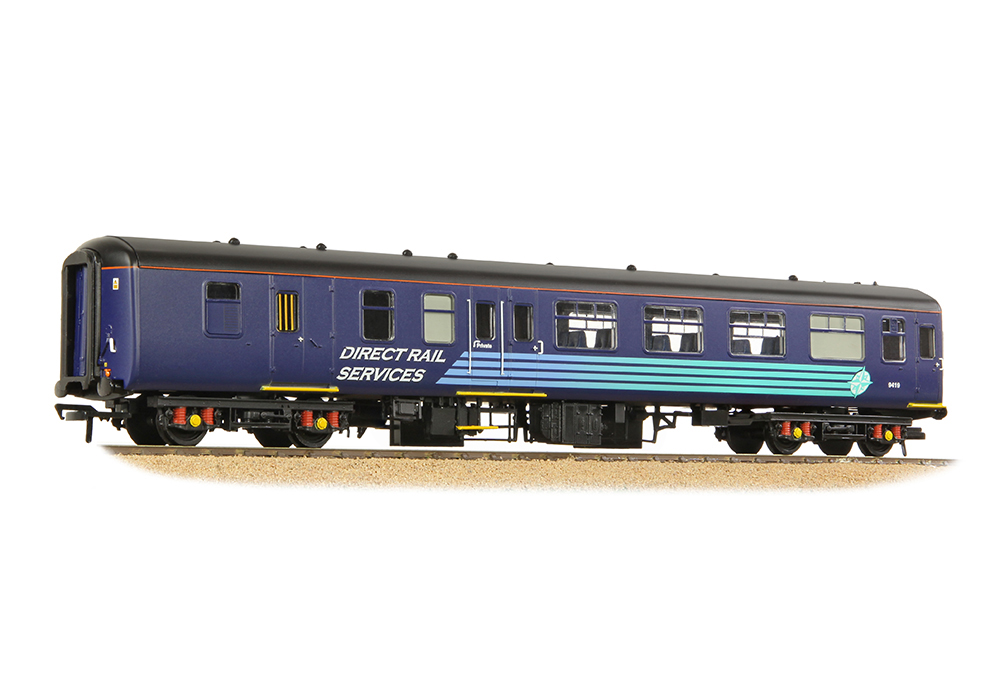
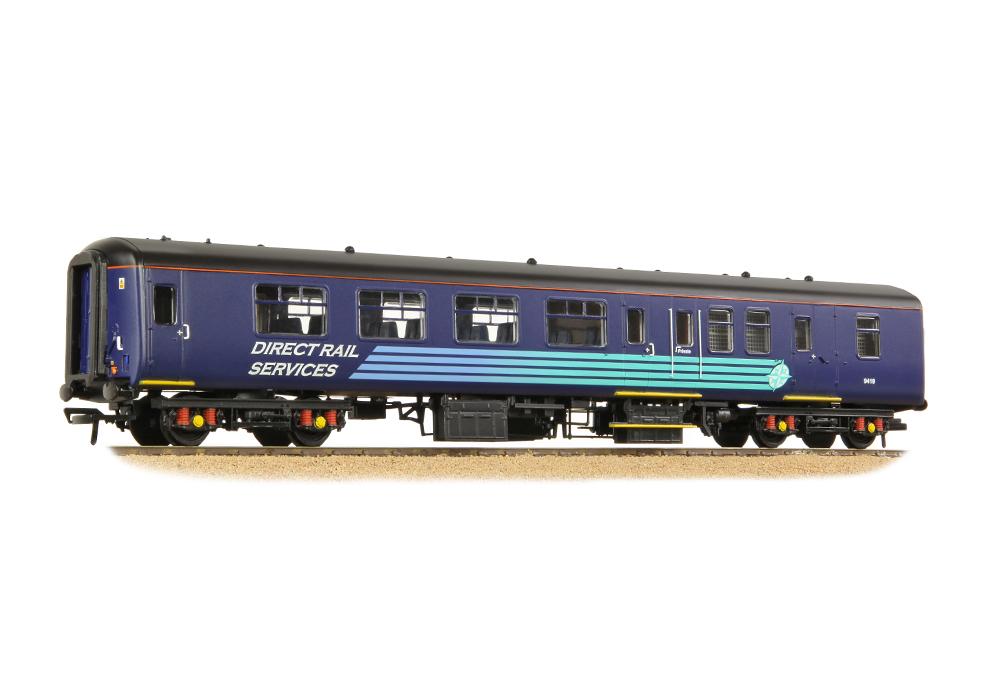
Click an image to enlarge.
|
39-383 Bachmann BR Mk2A BSO Brake Second Open DRS Compass (Revis
New release - pre-orders invited - expected Dec 2026 / Jan 2027. preauthkernow
British Rail’s second generation of standard coach was designated the Mk2, following on from the highly successful Mk1 series. Unlike the Mk1s however, the Mk2s evolved through different build batches, and such were the changes that a letter suffix was attributed to identify each of the different variants. Fewer coach types were built, with construction concentrating on vehicles offering standard accommodation of both first- and second-class, plus coaches that made provision for the Guard and train crew. Specialist vehicles such as catering and sleeping cars were not included, instead BR Mk1 and earlier types continued to fulfil these requirements until Mk3s with similar facilities arrived in the late-1970s to replace them. Like the Mk1s, the Mk2s were of steel construction, but featured more of a monocoque design than the Mk1, which added to their safety and integrity in the event of a collision.
The first Mk2s were built in 1964 and by 1967, the Mk2A had arrived. The Mk2 family evolved over the years until the final iteration, the Mk2F, entered traffic in 1973, with the last examples built in 1975 paving the way for the Mk3s. Many of the Mk2s were long lived, and indeed some remain in traffic today including the two Mk2As operated by DRS primarily to serve as barrier vehicles within nuclear trains.
When it comes to the Bachmann Branchline model, design details that were first introduced with the Mk2A coaches – like the Mk2 pattern gangways, 2-piece internal gangway doors and 3-piece sliding window ventilators, are all reproduced faithfully. The distinctive Mk2 shape gives the bodyshell and roof an unmistakable appearance, and this is captured to a tee, complete with separately fitted roof vents. Metal handrails, buffer heads and lamp irons are added individually to each coach end while the bodyside doors are complemented with a full set of door furniture from hinges and handles to step boards and even the door bumper stops. Window and door apertures are finished with flush glazing for a realistic appearance. Take a look below the solebar and you will find a full complement of underframe equipment – depicting the components of the braking, electrical and auxiliary systems.
The B4 bogies are fitted with metal wheelsets, whilst tension lock couplings attach via NEM coupling pockets to the close coupling mechanisms fitted to the carriage floor – these operate in tandem with the bogies. Inside each model is an interior featuring the prototypical layout of tables and chairs, whilst the icing on the cake is the livery application, using authentic colours, logos and fonts to give every model an exquisite appearance.
MODEL FEATURES:
- Bachmann Branchline OO Scale
- Era 9
- Pristine DRS Compass (Revised) livery
- Running No. 9419
- Accessory Pack
- NEM Coupling Pockets
- Close Coupling Mechanism
- Length 270mm (over couplings)
-
Academy Models
-

Accurascale
-
AFV Club
-

AIP by Bachmann
-
Airfix
-

Arnold
-

ATD Models
-
Auhagen
-
Bachmann
-
Bachmann Narrow Gauge
-
Bachmann USA
-
Barrie Stevenson
-

Bassett-Lowke
-
Berko
-

Busch
-

Cambrian
-

Clark Railworks
-

Corgi
-

Cornerstone
-
Dapol
-

Deluxe Materials
-
Dundas
-
Easy Model
-

Eckon
-
EFE Rail
-
EFE Road
-
Emhar
-

ESU
-
Exclusive First Editions
-

Faller
-

Fleischmann
-
Gaugemaster
-

Gecko Models
-

Golden Valley Hobbies
-
Graham Farish
-

Greenlight Collectibles
-

Heljan
-
HK Models
-

Hornby
-

Hornby International
-

Hornby TT:120
-

Humbrol
-

I Love Kit
-

Jouef
-
K&S Metals
-
Kadee
-
Kato
-
Kernow Models
-
Kestrel
-
Key Books
-

Kibri
-

Layout Concepts
-
Lenz Digital
-
LightCraft
-

Liliput
-
Lionheart Trains
-

Merit
-

Metcalfe
-

Middleton Press
-
Miscellaneous
-

model scene
-
ModelMaker
-
Murphy Models
-

Noch
-

Oxford Diecast
-
Oxford Rail
-
Parkside by Peco
-

PECO
-

Pegasus Hobbies
-

Plastruct
-
Platform 5
-

PM Model
-

Preiser
-
Proses
-
RailMatch
-
Rapido
-
Ratio
-

Revolution Trains
-

Rivarossi
-

Roco
-
Roden
-

Scale Model Scenery
-

Scalextric
-
Shawplan
-
Slaters
-

Smiths
-
Springside
-
Star Tec
-

Superquick
-
Suyata
-

Takom
-
Taliesin
-
Tillig
-
Tiny Signs
-
Toyway
-
Tracksetta
-

Train-Tech
-

TrainSave
-
Trumpeter
-

Viessmann
-

Vollmer
-
Wills
-

Woodland Scenics
-

Xuron

Copyright © Kernow Model Rail Centre 2001 - 2026
Connect with us socially